
Kruger National Park is one of the most biodiverse wildlife destinations on eart, and one of the most misunderstood. Ask most first-time visitors what they expect to see, and the answer is usually the same: lions, leopards, elephants, rhinos, and buffalo. The famous Big Five.
What they’re less prepared for is everything else: the giraffe materialising silently between acacia trees, the impala frozen mid-road at dawn, the thundering herd of buffalo raising a wall of dust against a winter sky. Kruger is home to over 147 mammal species, 500 bird species, and more reptiles, amphibians, and insects than most visitors will ever notice.
The Big Five are the headline act, but the supporting cast is extraordinary.
Here’s a realistic, detailed guide to what animals you can actually see in Kruger, what influences your sightings, and how to make the most of every hour in the bush.
The Big Five: What Are They and Are They Guaranteed?
The term “Big Five” was originally coined by big-game hunters to describe the five most dangerous and difficult animals to hunt on foot: the lion, leopard, elephant, white rhino, and black rhino, as well as the Cape buffalo. Today it refers to the five most sought-after wildlife sightings on safari, and Kruger is one of the few places in the world where all five are genuinely present.
The honest truth: No reputable operator will guarantee Big Five sightings on a day safari. The park covers nearly 20,000 square kilometres. Animals move freely, rest in dense bush, and don’t perform on schedule. Day safaris that promise “guaranteed Big Five” are either misleading their guests or setting up a disappointment.
What a good guide can guarantee is effort, knowledge, and the best possible chance — and on many days, that’s enough.
Animals Commonly Seen in Kruger
The southern Kruger region – accessed via Malelane Gate, Crocodile Bridge Gate, and Paul Kruger Gate (Skukuza) – is widely considered the richest and most productive area of the park for wildlife viewing. The mix of riverine bush, open grassland, and permanent water sources along the Sabie and Crocodile rivers creates exceptional biodiversity in a relatively compact area. These are the species you’re most likely to encounter:

African Elephant
Elephants are among the most reliably spotted animals in southern Kruger. Herds are regularly seen crossing the H3 (Malelane to Skukuza road), drinking along the Sabie River, and moving through the mixed woodlands between Berg-en-Dal and Skukuza. Their size makes them visible from a distance and the sight of a breeding herd on the move never gets old.

Giraffe
Common throughout the southern region, giraffe browse in the acacia and knob-thorn woodlands that dominate the area. They’re often spotted near Pretoriuskop and along the Voortrekker Road. Despite their height, they can appear suddenly and silently between trees; one of those sightings that still surprises first-time visitors.
Plains Zebra
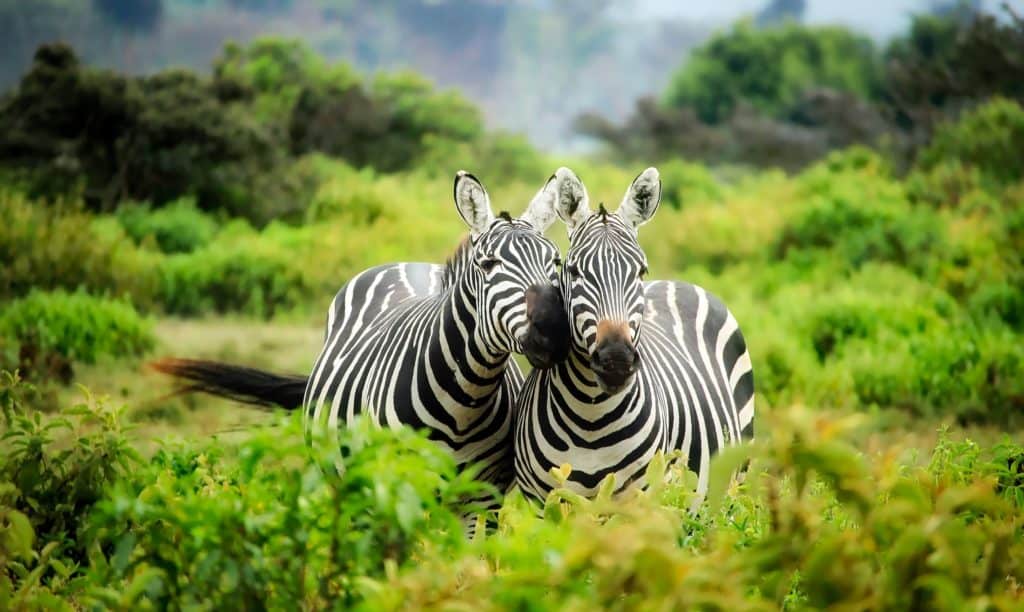
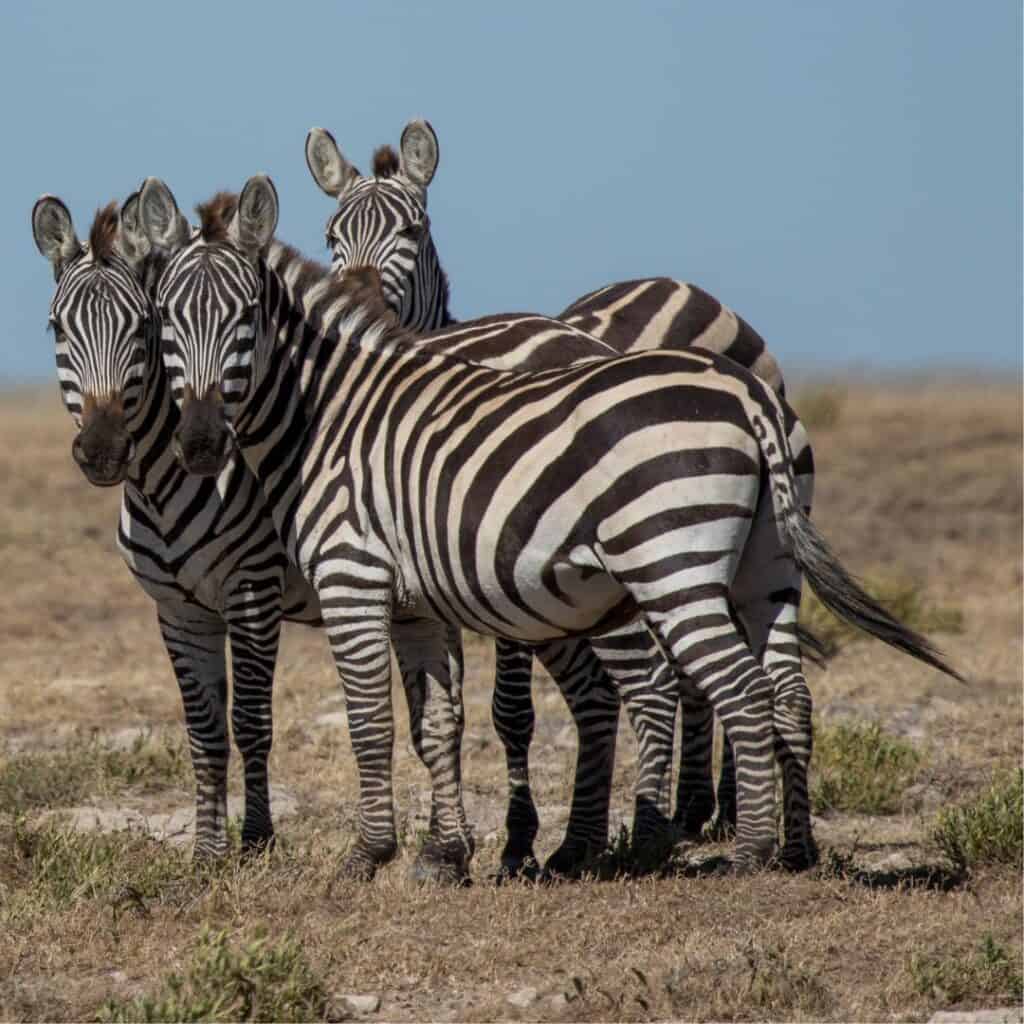
Zebra are a near-constant presence across southern Kruger’s grasslands and mixed bushveld, especially around Lower Sabie and the eastern plains toward Crocodile Bridge. They typically graze in mixed herds alongside impala and wildebeest, providing safety in numbers against the area’s resident predators.
Impala
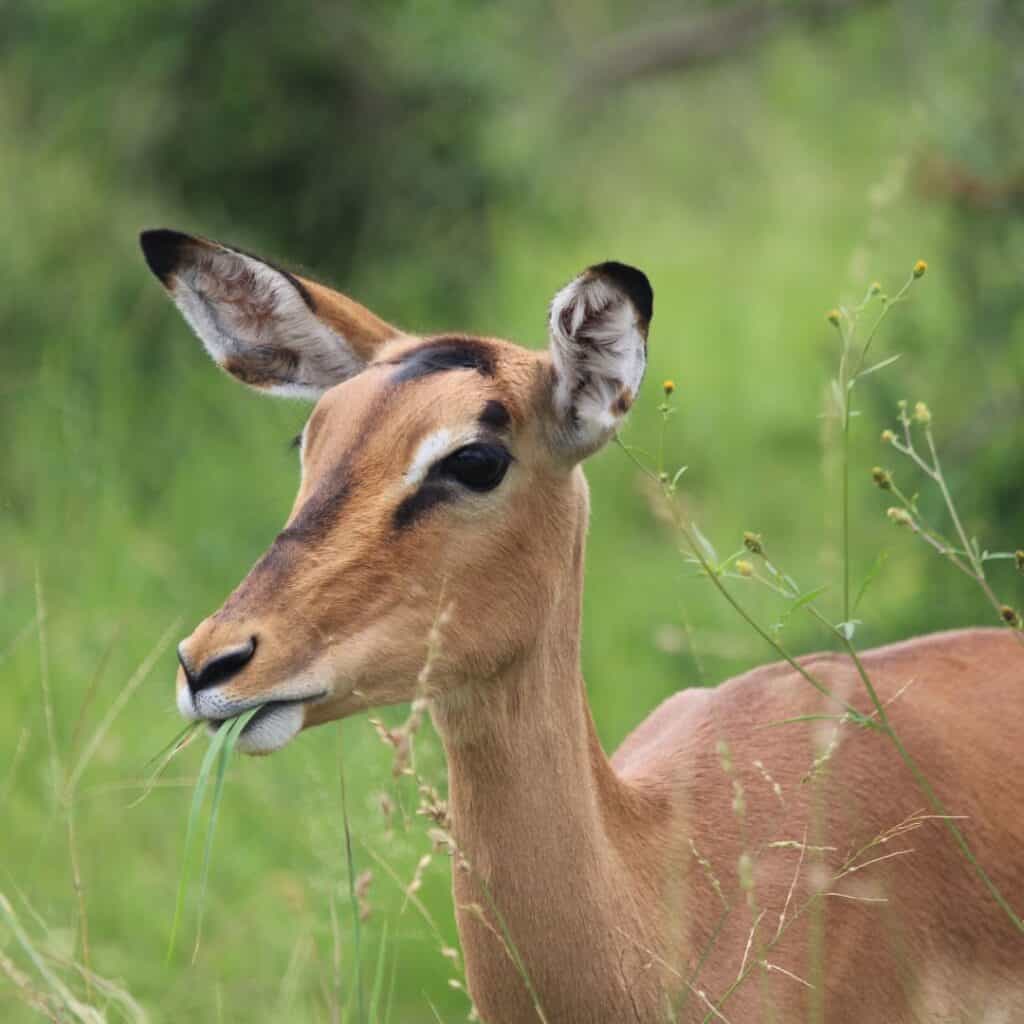
The most numerous antelope in the park, and perhaps the most important. Impalas are the prey base for nearly every predator in the south, which is partly why predator densities are so high here. Herds of 30–100 animals are commonly seen along roadsides, particularly in the thorn thicket areas around Skukuza and Lower Sabie.

Cape Buffalo
Buffalo are frequently seen in the south, particularly along the S25 (Crocodile River road), the H4-2 (Crocodile Bridge to Lower Sabie), and around the Afsaal picnic area. Hyenas are regularly spotted in their vicinity, and lions follow close behind. Solitary “dagga boys” (old males encrusted with dried mud) are often found near waterholes and rivers.

White Rhino
Southern Kruger is one of the best areas in the entire park for white rhino sightings. The Malelane to Skukuza road (H3), the Voortrekker Road (Pretoriuskop to Afsaal), and the area around Crocodile Bridge are all known rhino strongholds. They graze on open grassland, making them easier to spot than the black rhino’s preference for dense bush. Every rhino sighting carries weight as their numbers have declined sharply due to poaching.
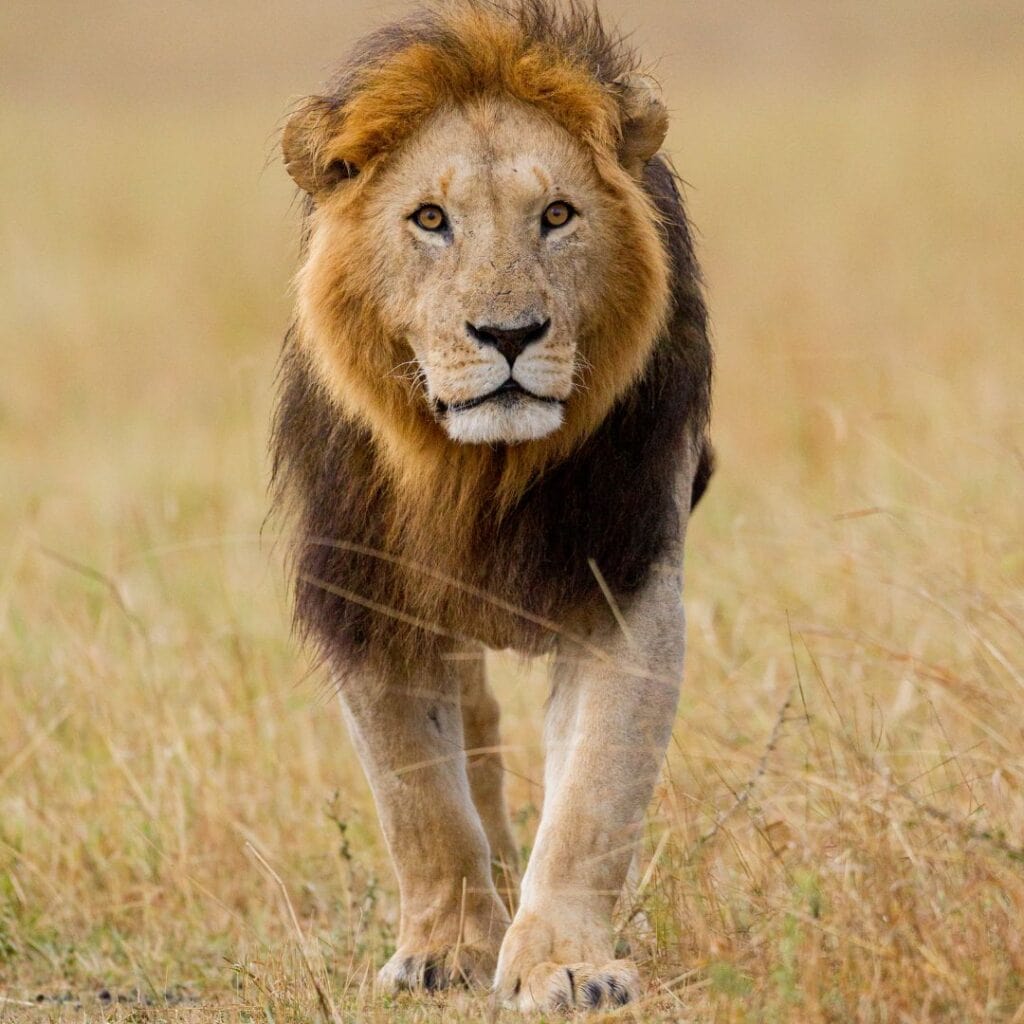
Lion
The south is excellent lion territory. The H3 from Malelane to Skukuza, the H4-1 (Skukuza to Lower Sabie), and the H4-2 (Crocodile Bridge to Lower Sabie) are consistently productive lion roads. The S118 near Malelane Gate is particularly well-known for lion and buffalo interactions as guides frequently report kills in this area. Lions rest in shade through the midday heat, so early morning and late afternoon drives are your best windows.
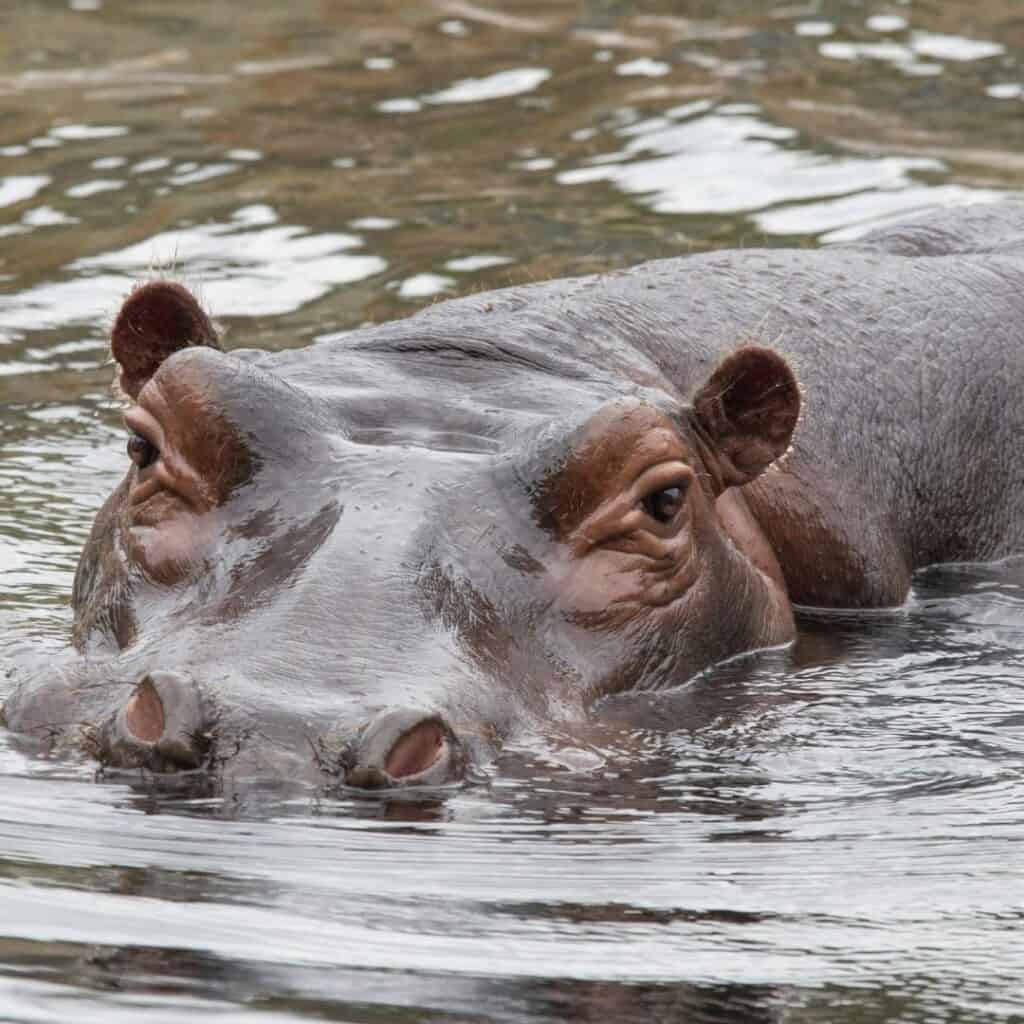
Hippo
With the Sabie and Crocodile rivers running through the south, hippo are reliably spotted from bridge viewpoints and river lookouts. The Nkuhlu Picnic Site along the H4-1 offers terraced views over the Sabie River where hippo and crocodile are almost always present. They spend the day submerged or resting on sandbanks; guides know exactly where to find them.
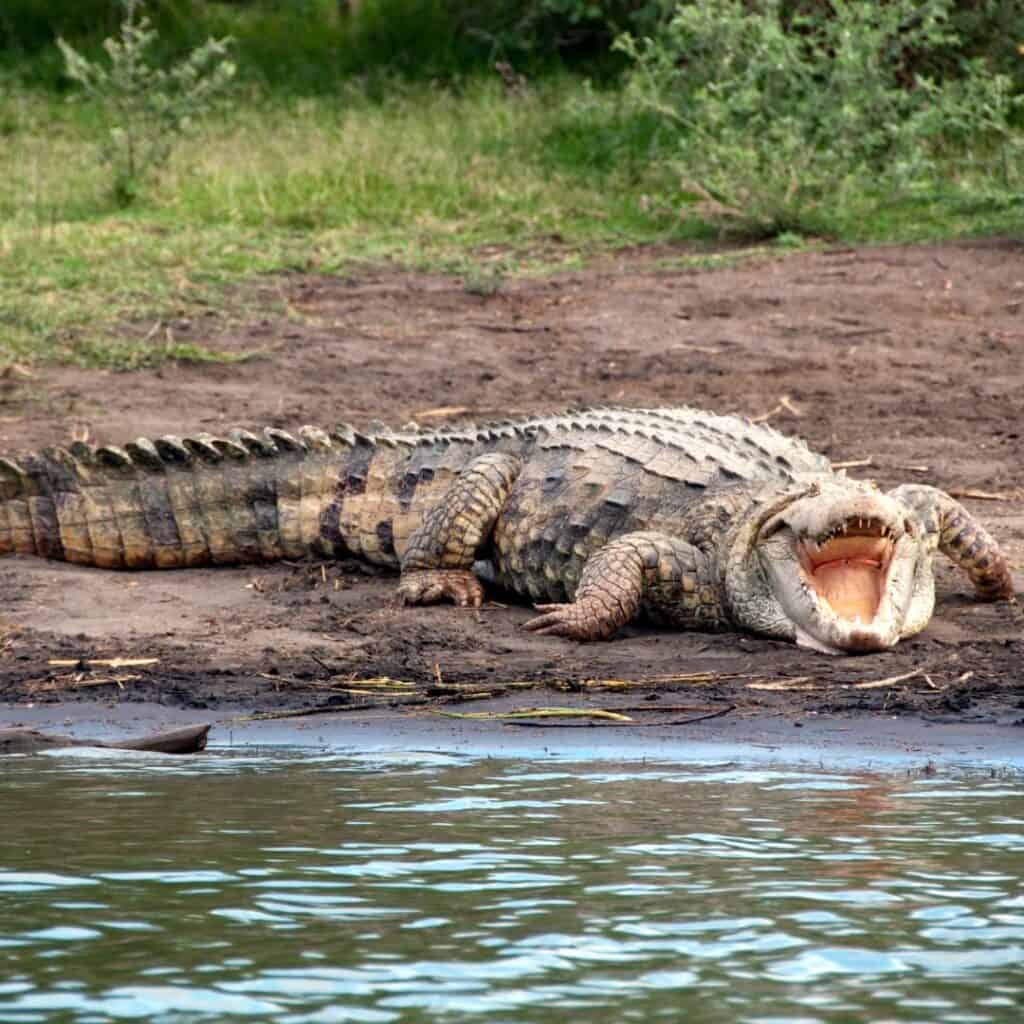
Nile Crocodile
Large crocodiles bask on the sandbanks of the Sabie and Crocodile rivers, and are a near-certainty at any river crossing or dam stop. Sunset Dam near Lower Sabie is one of the best spots in the park for crocodile viewing alongside exceptional waterbird sightings.
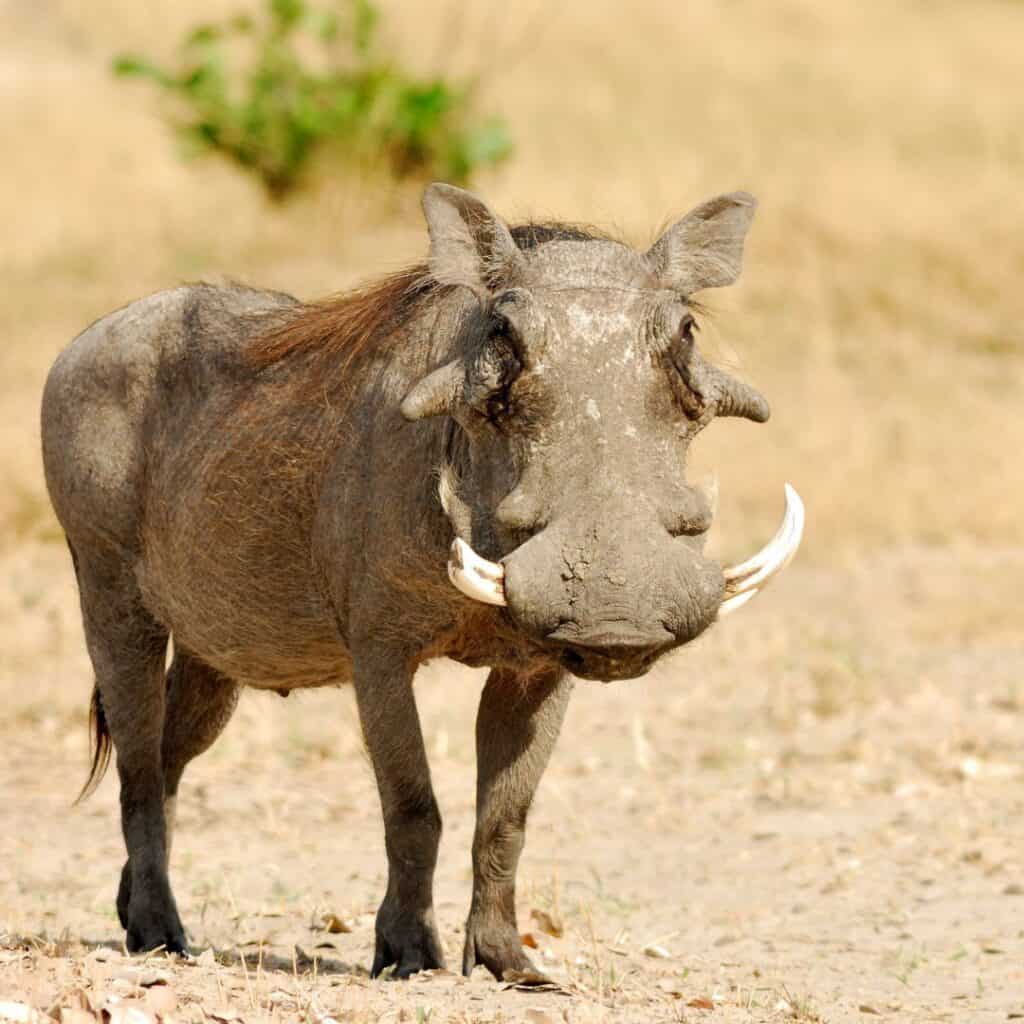
Warthog
Warthog are a constant and entertaining presence throughout the south – often seen trotting away from the road with their tails held straight up, or kneeling at waterholes. Families with youngsters (called piglets) are common in the summer months and unfailingly popular with guests of all ages.
Animals That Require More Patience (Or Luck):
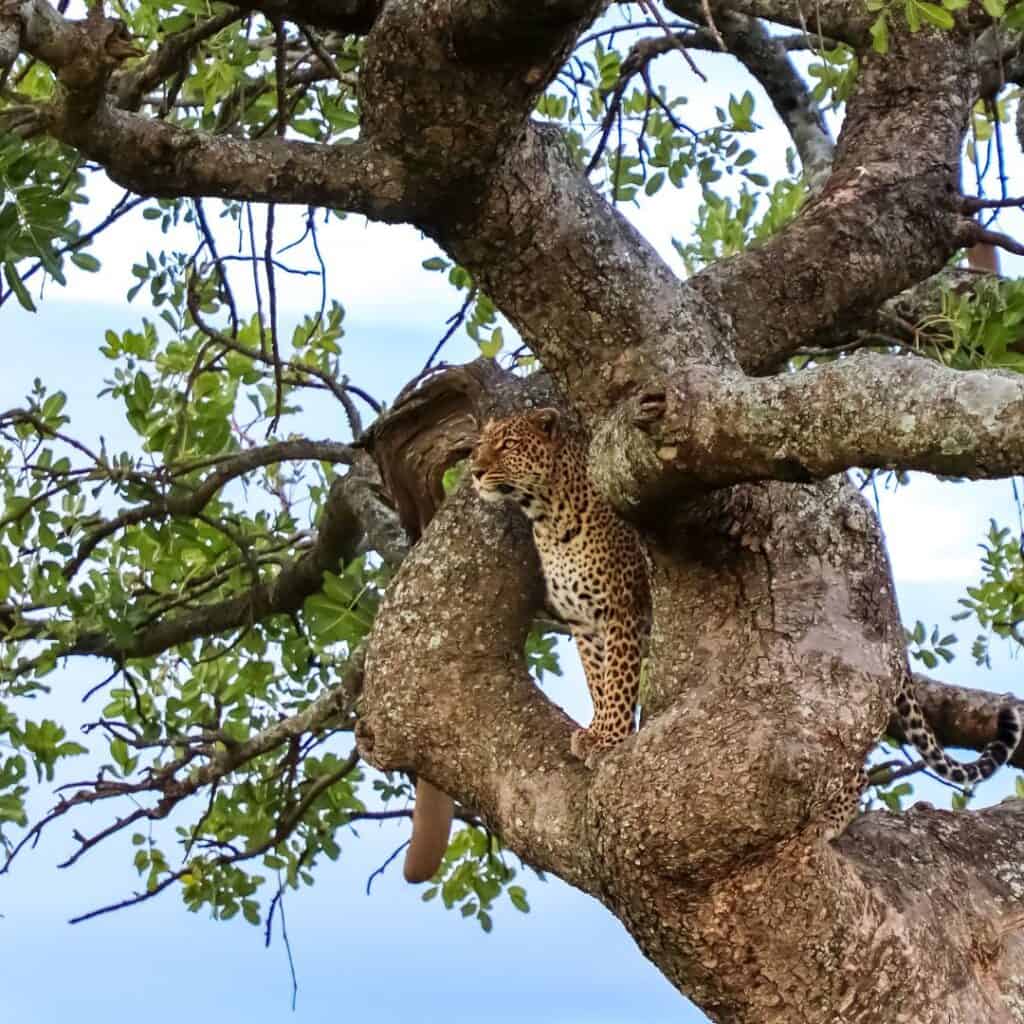
Leopard
Southern Kruger is arguably the best area in the entire park for leopard sightings, and it still requires patience. The Skukuza to Lower Sabie road (H4-1) and the Sabie River riverine bush are reported to have one of the highest leopard densities in South Africa. The H3 from Malelane to Skukuza produces great leopard sightings regularly, and the S28 near Lower Sabie is known among guides as a prime spot. Leopards rest in trees during the day – so look up, not just along the road. When you do see one, the experience is hard to put into words.

Black Rhino
Far rarer than white rhino, black rhino are browsers rather than grazers, preferring dense thicket and riverine vegetation, both of which are plentiful in the south. They’re present, but a sighting is genuinely exceptional.
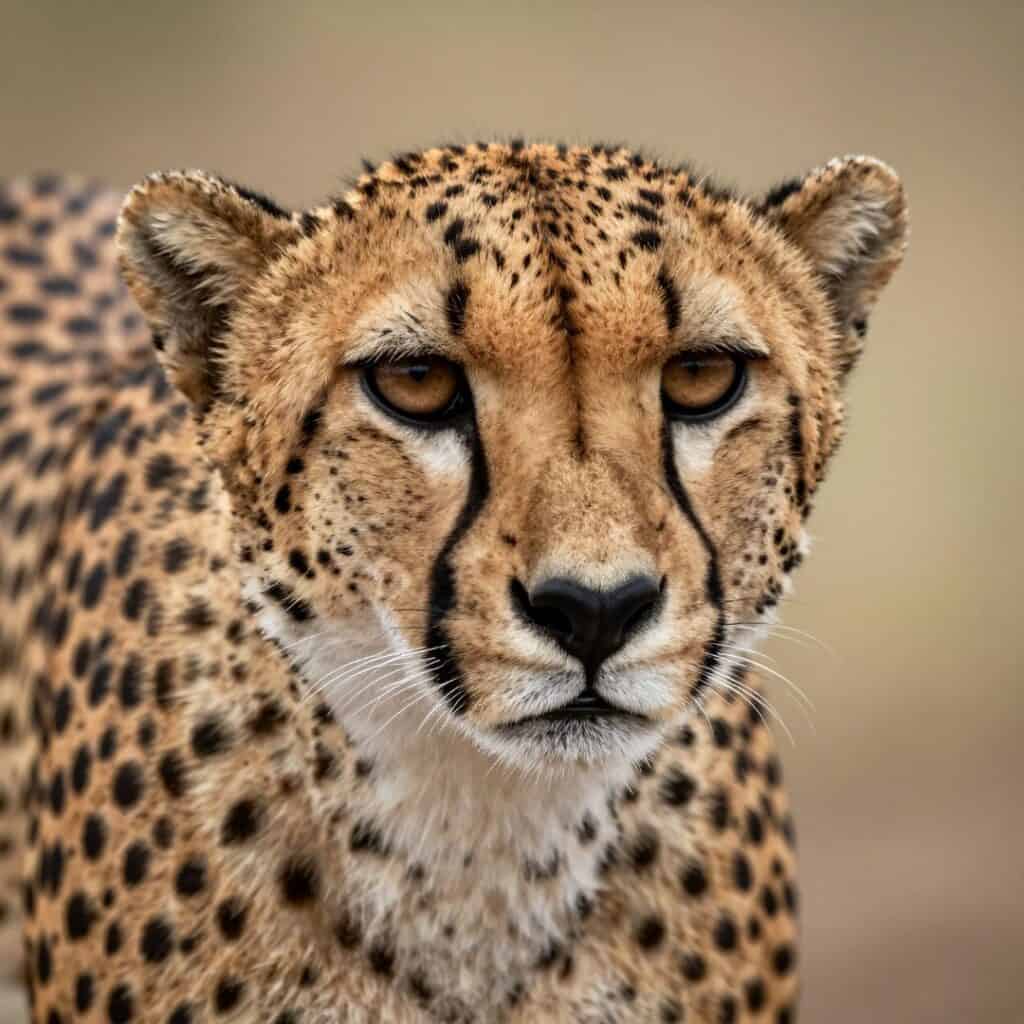
Cheetah
Cheetahs are present in southern Kruger at low densities. The open grassland areas around Pretoriuskop and the road from Pretoriuskop to Skukuza have historically produced cheetah sightings. Unlike the leopard, the cheetah hunts in daylight, so a sighting on open plains is possible, but far from routine.
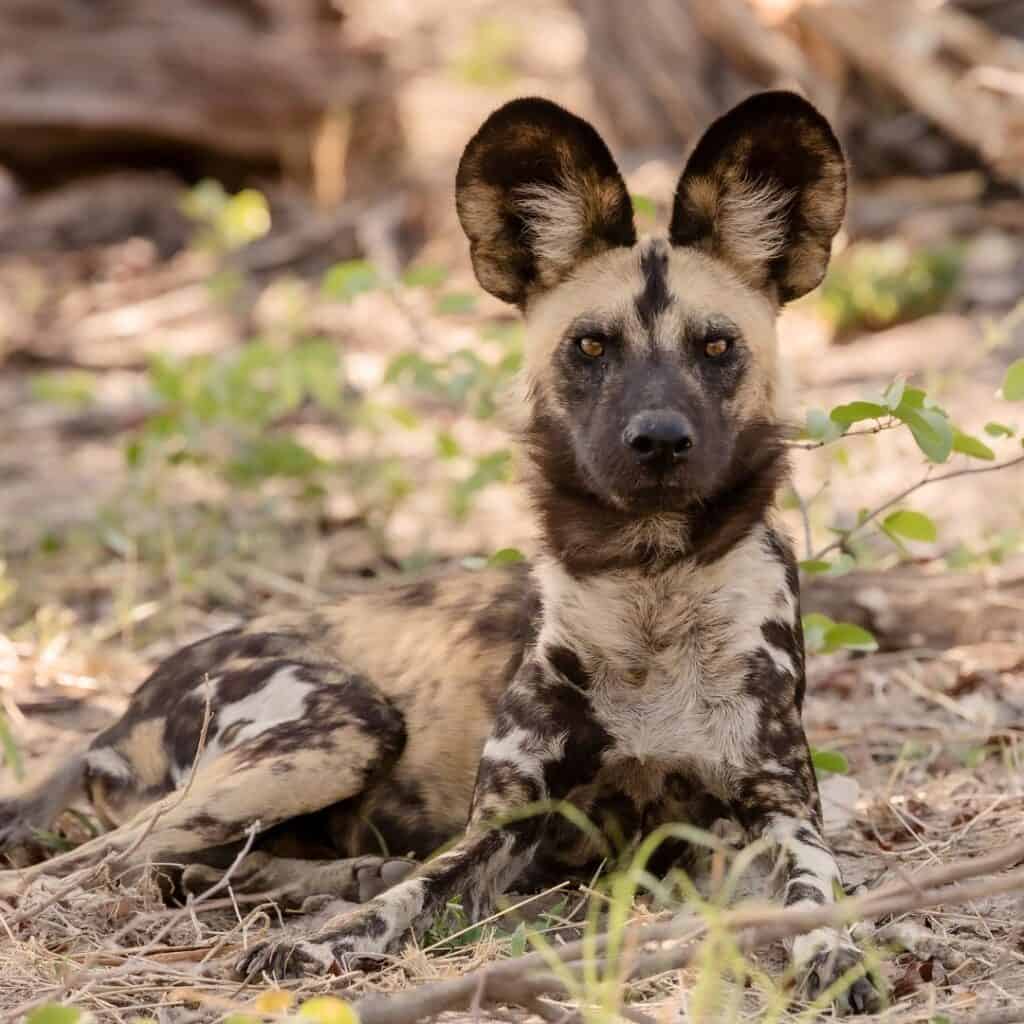
African Wild Dog
One of Africa’s most endangered predators, and one of the most exciting things you can possibly encounter on a Kruger safari. Wild dogs are present in the south from Crocodile Bridge to Lower Sabie road (H4-2) and the Crocodile River area has produced sightings, but pack numbers are low, and sightings are rare. When wild dogs are active, the guide radio network lights up immediately.
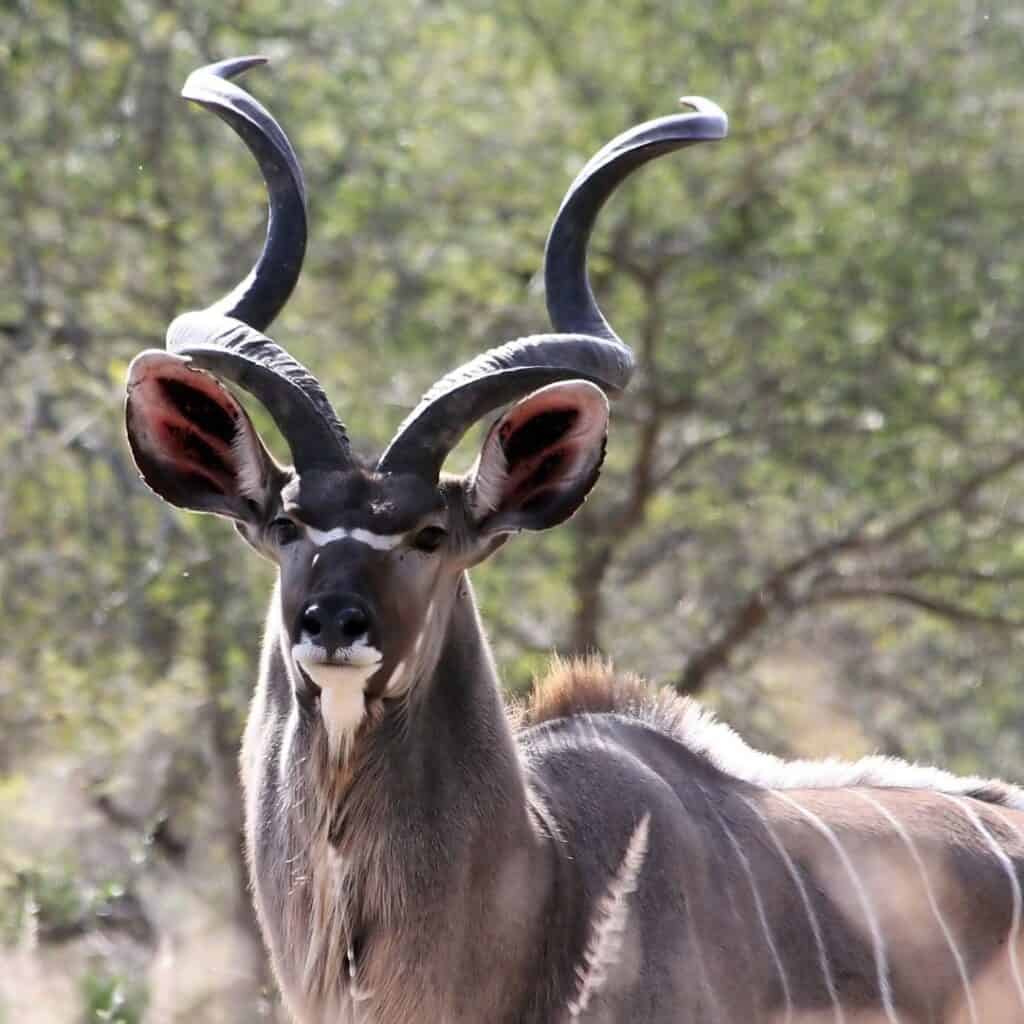
Blue Wildebeest & Kudu
Not rare, but often overlooked. Wildebeest graze in mixed herds across the southern grasslands, and kudu – the elegant spiral-horned antelope – are regularly spotted in the thicker bush around Skukuza and the Sabie River. Bull kudu with their towering horns are one of the most visually striking animals in the bush.
The Species Most People Miss
The most experienced Kruger visitors will tell you to broaden your focus beyond the Big Five. Some of the most compelling wildlife in the park is routinely overlooked by guests fixated on ticking boxes:
Spotted Hyena – Far more common than most visitors expect. Hyenas are regularly seen along the Malelane to Skukuza road and around Afsaal, particularly in the early morning. They’re often dismissed as “just hyenas” – an attitude that changes quickly once you watch a clan interacting at a waterhole.
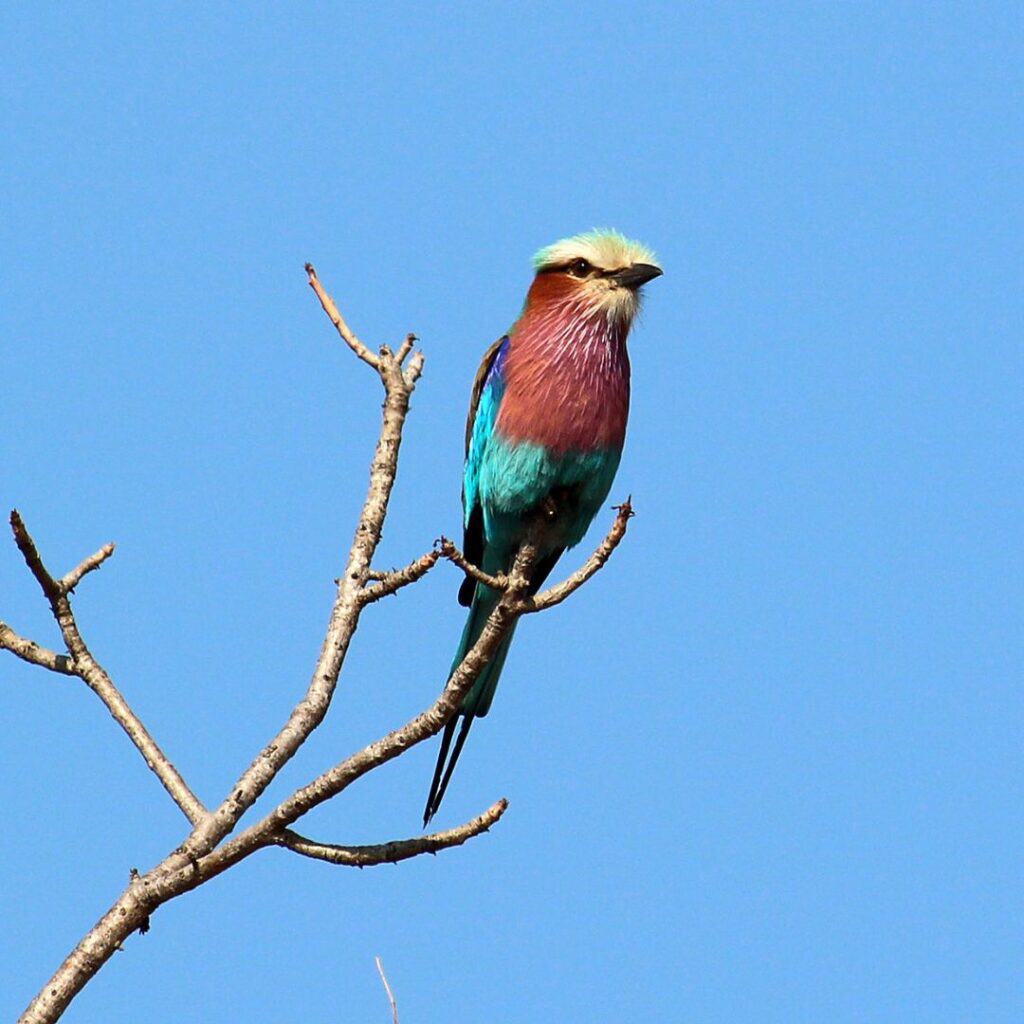
Birds – Southern Kruger is exceptional for birdlife. Sunset Dam near Lower Sabie is one of the best waterbird spots in the park. The lilac-breasted roller, African fish eagle, saddle-billed stork, southern ground hornbill, and bateleur eagle are all regularly seen in the south. A good guide narrates birdlife throughout the drive, adding enormous depth to the experience.
Smaller mammals – Black-backed jackal, African civet, honey badger, dwarf mongoose, and vervet monkey are all found in the south. Hyenas are especially active at dawn. The Berg-en-Dal area around Malelane is also known for klipspringer on the rocky koppies.
Herds of plains game – Waterbuck, eland, steenbok, bushbuck (particularly in the riverine bush around Skukuza), and nyala round out the constantly shifting theatre of plains life. These species are seen on almost every drive and reward patient observation.
Pangolin – The most elusive animal in Kruger. Nocturnal, heavily trafficked, and extraordinarily rare to see. A pangolin sighting is a once-in-a-lifetime event anywhere in the park.
What Affects Animal Visibility the Most?
Season
The dry winter months from May to September are widely regarded as the best time for wildlife viewing in Kruger. Grass is low, trees have shed their leaves, and vegetation thins significantly — meaning you can see much further into the bush. More importantly, animals concentrate around the few remaining permanent water sources, making sightings more frequent and more predictable.
In the wet summer months (November to February), the vegetation is dense and lush, beautiful, but animals can be metres from a vehicle and invisible. Summer brings spectacular birdlife and newborn animals, but expects fewer and less dramatic game sightings overall.
Time of Day
The first two hours after sunrise and the last two hours before sunset are the most productive for wildlife viewing. Animals are active, predators are moving, and the light is extraordinary. This is why full-day Kruger safaris depart at 05:00–05:30 AM, and missing that window can be a real cost.
The midday hours (roughly 10:00–13:00) are quieter as animals rest in the shade. A full-day safari uses this time for a lunch stop and a rest camp visit before the afternoon activity picks up again.
Guide Quality and Communication
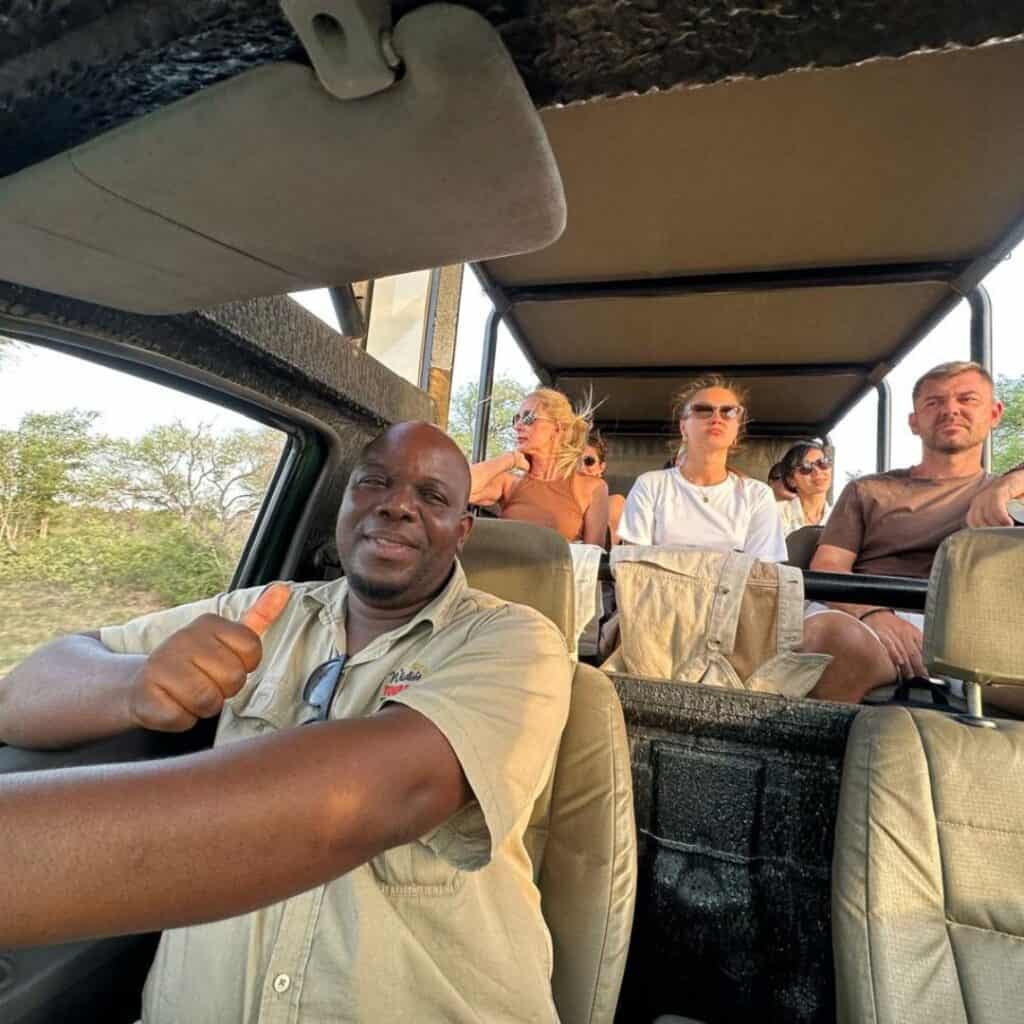
This is the factor most guests underestimate. An experienced guide reads tracks, behaviour, and landscape in real time – and critically, communicates via radio or phone app with other vehicles in the park to share live sighting information. That network significantly changes what you see. A guide who spots an impala staring into the bush, reads it as a predator alert, and follows that alert is the skill that separates an average safari from a great one.
Realistic Expectations: The Right Mindset for a Kruger Safari
The most satisfied safari guests share one thing: they didn’t come with a checklist. They came with curiosity.
A day in Kruger where you see no lions but watch a herd of 200 buffalo cross the road at dusk, spot a fish eagle snatching prey from a dam, and sit with a breeding herd of elephants for 30 minutes – that’s a remarkable day. Not a “disappointing” one.
Guides who care about your experience spend as much time explaining the behaviour and ecology of what you’re seeing as they do finding the next animal. Even quiet sightings become extraordinary with the right interpretation.
Free Safari Guide eBook
When you book any Kruger safari through Tours & Tickets SA, you receive a free Digital Safari Guide eBook to download before your trip. It includes a full animal identification checklist you can use to track your sightings on the day, bird and reptile guides, safari tips, and everything you need to know before you set off. It’s a practical companion that makes your time in the park richer and a great way to get the whole family engaged before you even arrive at the gate.
This is the kind of added value that makes booking with a local expert different from going it alone.
Book a Guided Kruger Safari with Tours & Tickets SA
Ready to see southern Kruger’s wildlife for yourself? Tours & Tickets SA offers guided Kruger safaris from Malelane, Marloth Park, Komatipoort, Hoedspruit, and Hazyview – in open 4×4 vehicles with qualified, knowledgeable guides who know the southern region roads and sighting hotspots intimately.
Every booking includes a FREE Digital Safari Guide eBook with a full animal checklist, bird guide, and safari tips! So you arrive prepared and get more out of every sighting.
- 👉 Full Day Kruger Safari from Hoedspruit
- 👉 Big 5 Game Drives on Private Reserves
- 👉 Half Day Kruger Safari (Morning or Afternoon)
- 👉 Browse All Kruger Safaris
📞 +27 82 574 2345 | 📧 book@tours-tickets.co.za | WhatsApp: +27 82 574 2345
Can you see the Big Five on a day safari in Kruger?
It’s possible, but not guaranteed. Southern Kruger is one of the best regions in the park for Big Five sightings — all five are genuinely present and the south has exceptional leopard and rhino habitat. A full-day safari gives your guide the best chance, but wildlife sightings depend on the day, season, time, and luck. Most guests on full-day drives see 3–4 of the Big Five; some see all five. Every day is different, that’s what makes it real.
What is the best time of year to see animals in Kruger?
May to September (dry winter season) is the best time for wildlife visibility. Grass is sparse, vegetation is low, and animals gather at water sources making them easier to find and observe.
Is southern Kruger better than central Kruger for wildlife?
The south has distinct advantages: it has the highest leopard density in the park, excellent white rhino numbers, strong lion populations, and permanent rivers (Sabie and Crocodile) that attract wildlife year-round. Central Kruger (around Satara) is better for open-plains game like large lion prides and cheetah on grassland. Both regions are exceptional – the south is generally considered more accessible and consistently productive.
Is Kruger good for birdwatching?
Exceptional. With over 500 recorded species, Kruger is one of Southern Africa’s premier birding destinations. Sunset Dam near Lower Sabie is one of the park’s top waterbird hotspots. Summer (November–March) is best for migratory species; winter is better for overall visibility.
What animals are most commonly seen in southern Kruger?
Elephant, giraffe, zebra, impala, buffalo, warthog, white rhino, hippo, and crocodile are seen on most southern Kruger safaris. Lion and leopard are regularly spotted — the south is one of the best areas in the park for both. Spotted hyena and a wide range of plains game round out almost every drive.
Do I get anything to help identify animals before my safari?
Yes — when you book a Kruger safari through Tours & Tickets SA, you receive a free Digital Safari Guide eBook that includes a full animal identification checklist, bird guide, and practical safari tips. It’s the perfect preparation tool, especially for first-time visitors.